To understand watchmaking is to understand the divide that nearly destroyed the Swiss watch industry in the 1970s and 1980s. The 'Quartz Crisis' (or 'Quartz Revolution', depending on which side of the Atlantic you were on) fundamentally altered how humanity measures time. Today, the choice between mechanical and quartz movements remains the first fork in the road for any new collector.
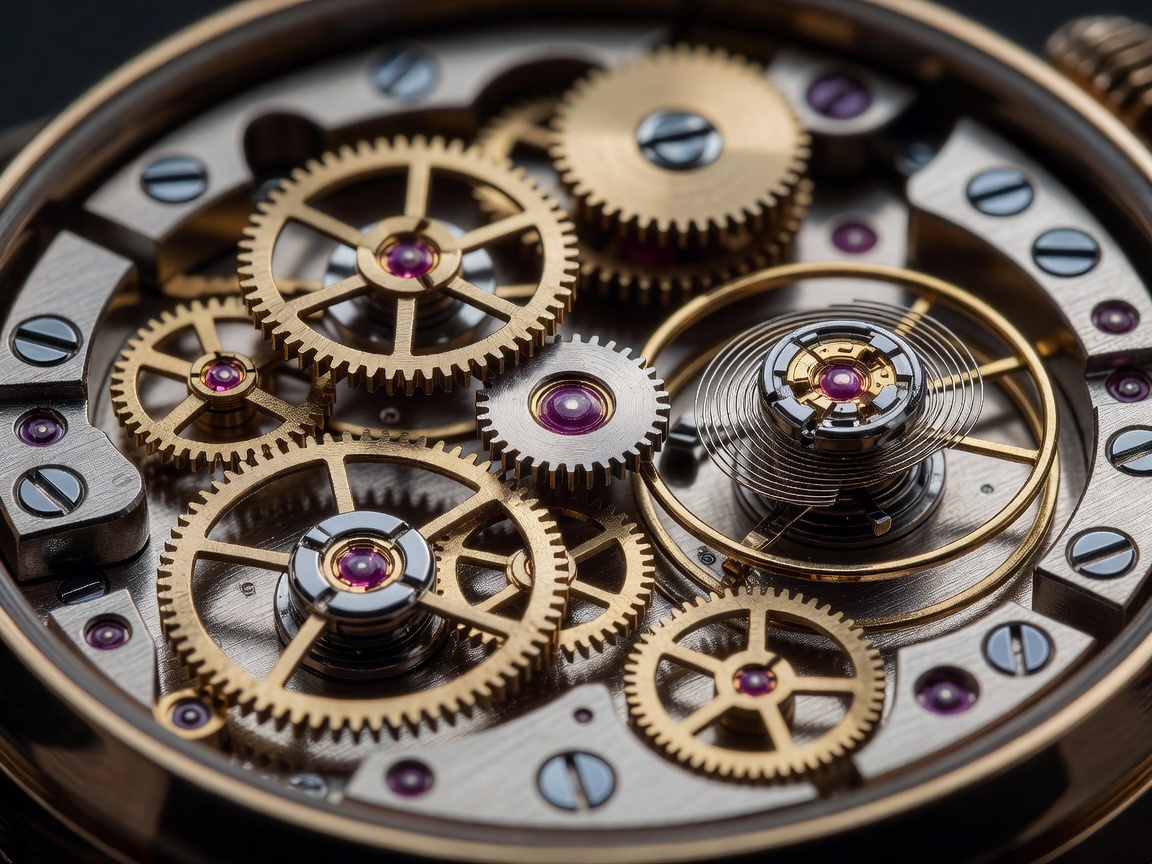
The Mechanical Movement: Art in Motion
A mechanical watch contains no battery, no microchips, and no circuitry. It is driven entirely by potential energy stored in a coiled piece of metal called the mainspring. As this spring slowly unwinds, it transfers power through a series of gears (the gear train) to the escapement, which doles out the energy in precise, regulated impulses. This is what creates the iconic 'tick-tick-tick' sound and the sweeping motion of the seconds hand.
Pros and Cons of Mechanical
- Longevity: A well-maintained mechanical watch can outlive its owner, becoming a generational heirloom.
- Craftsmanship: The sheer ingenuity of gears, levers, and springs working in harmony is celebrated as an art form.
- No Batteries: Powered by manual winding or the motion of your wrist (in automatic movements).
- The Drawbacks: They are inherently less accurate, more sensitive to shocks and magnetism, and require expensive servicing every five to ten years.
The Quartz Movement: Absolute Precision
Introduced commercially in 1969, quartz technology revolutionized timekeeping. A battery sends an electrical current through a tiny quartz crystal shaped like a tuning fork. The piezoelectric effect causes the crystal to vibrate exactly 32,768 times per second. A microchip counts these vibrations and sends a pulse to a stepper motor every second, moving the hands.
Pros and Cons of Quartz
- Accuracy: Even a basic quartz watch is an order of magnitude more accurate than a highly certified luxury mechanical chronometer.
- Durability: With fewer moving parts, quartz watches are significantly more robust against shocks.
- Cost: Generally much cheaper to produce and maintain. A simple battery change every few years is usually all that is required.
- The Drawbacks: Many collectors feel they lack the 'soul' or romanticism of mechanical watchmaking. Furthermore, if a quartz circuit board fails decades later, replacement parts may not exist.
Which Deserves a Place on Your Wrist?
The answer is not binary. Many of the most sophisticated collectors recognize the merit of both. A mechanical timepiece offers a tangible connection to traditional craftsmanship—a tiny, beating mechanical heart on the wrist. Conversely, a high-end quartz piece serves perfectly as a reliable 'grab-and-go' watch that never needs resetting.
Ultimately, your choice dictates how you will interact with your watch. Do you seek the romance of manually winding a mainspring each morning, or do you demand the unyielding precision of modern technology?